
14 December, Beijing — Renmin Business School (RMBS) held its MBA Education Forum and the 35th Anniversary Conference of its MBA program. The event, themed “Breaking Barriers and Moving Forward: Management Education Empowering Enterprises for Sustainable Growth,” explored the mission of management education and discussed new pathways for management talent development and enterprise growth.
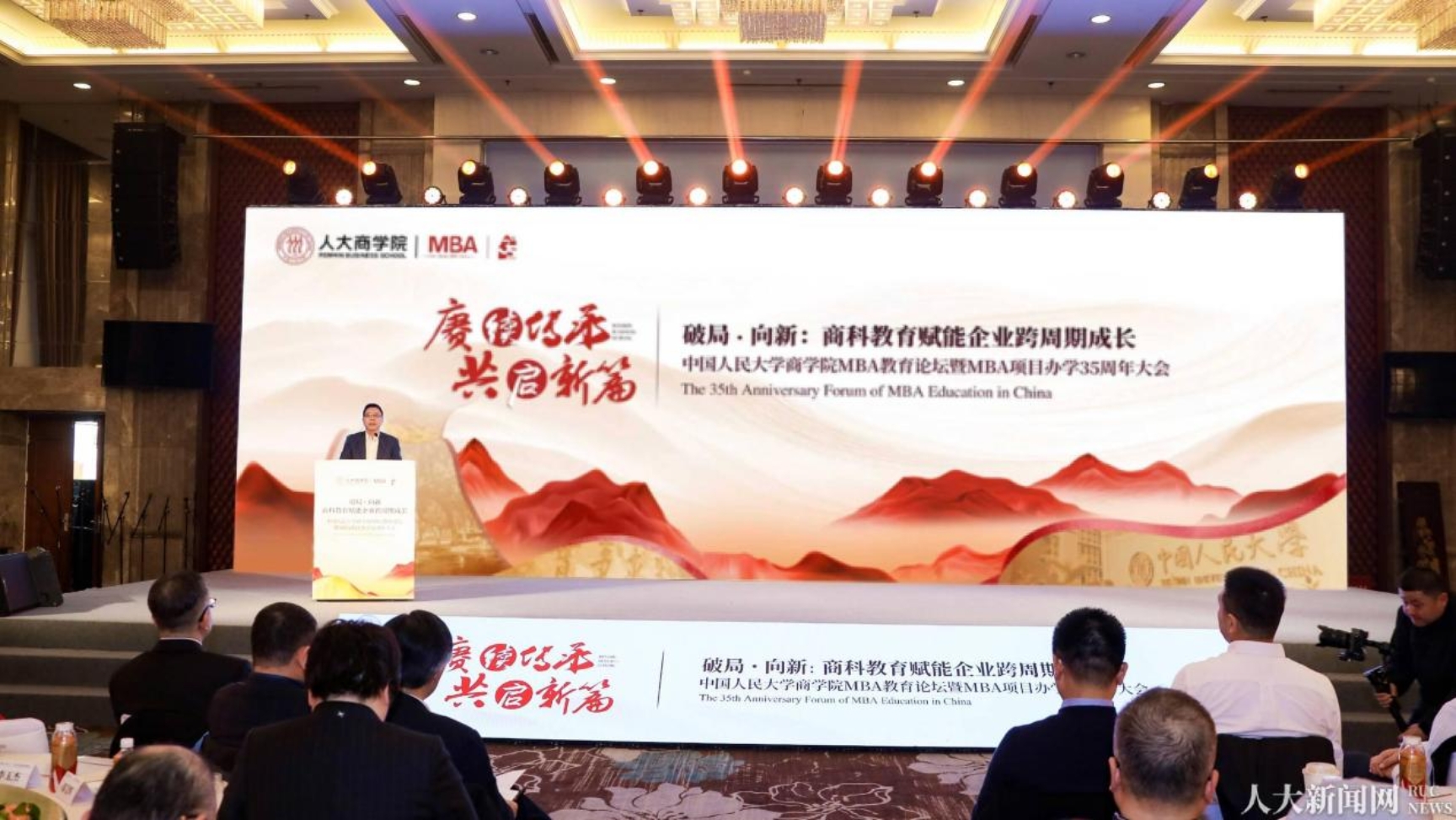
Zheng Shuiquan, Deputy Secretary of the CPC Committee of Renmin University of China, attended and delivered opening remarks. Other distinguished participants included Yi Zhihong, Vice Chair of the National MBA Education Steering Committee and former Vice President of the university; Yi Jingtao, Dean of RMBS; Zhao Daxuan, Vice Dean of RMBS; Kuang Weida, the MBA program director of RMBS; Yang Du, Professor in the Department of Organization and Human Resources; Zhu Futang, Executive President of the Agriculture and Rural Affairs Committee of the China Investment Association and MBA alumnus (Class of 1991); and Li Yujie, Chairman and President of 263 Network Communications Co., Ltd., member of the International Advisory Board of RMBS and MBA alumnus (Class of 2008). Nearly 400 people attended, including faculty members, students, alumni, representatives from the Graduate Management Admission Council (GMAC), alumni association leaders, and MBA program directors from partner institutions. The event was chaired by Xuan Tianying, Party Secretary of RMBS.
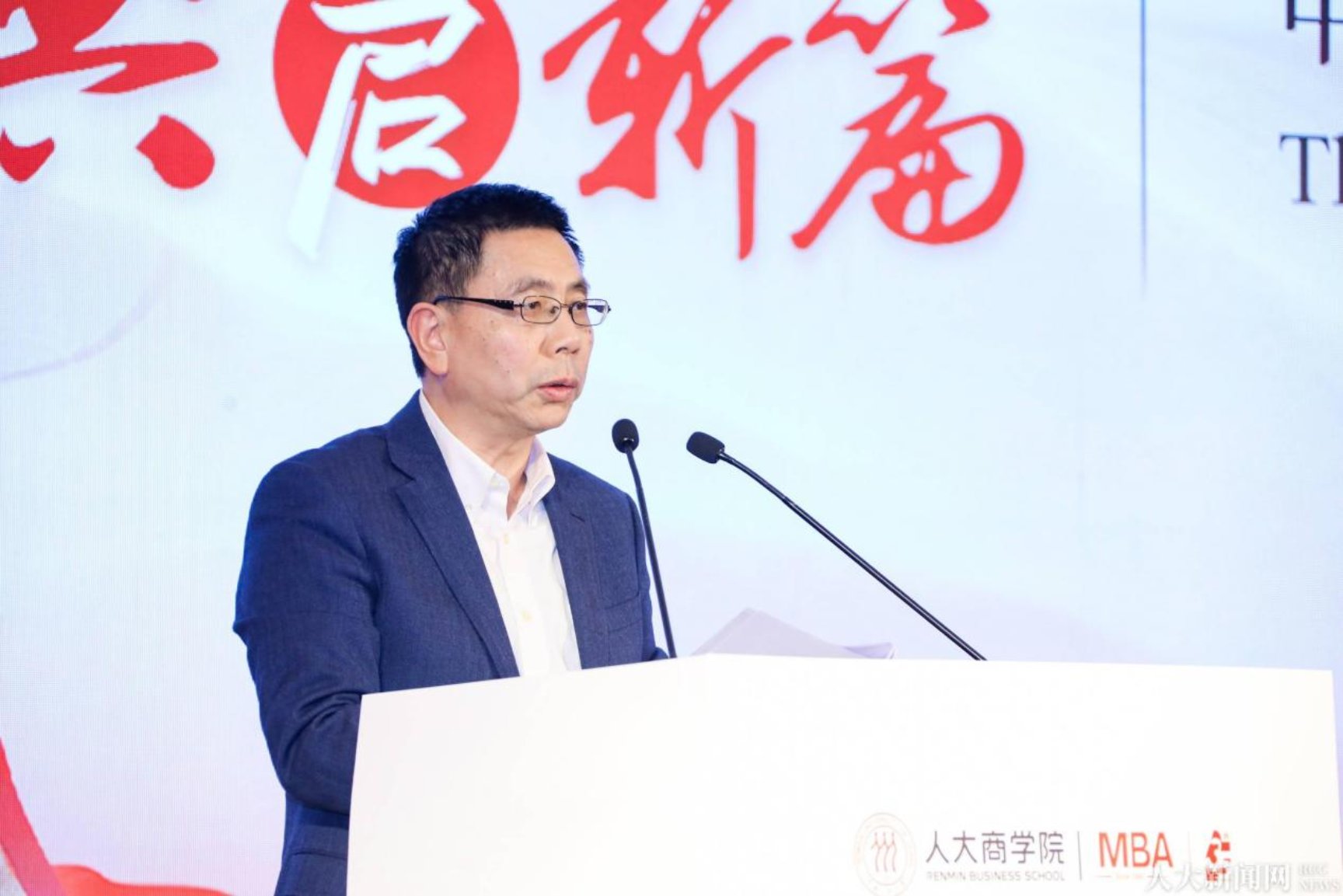
Zheng Shuiquan noted that RMBS, as the “cradle of business administration education in China,” has made significant achievements over the past 35 years. The MBA program has developed distinctive features. These include integrating Chinese wisdom with global perspectives, combining management education with the humanities, and promoting both moral character and professional competence. He expressed hope that the program will continue to uphold its mission, deepen innovation while staying grounded, and strengthen alumni engagement.
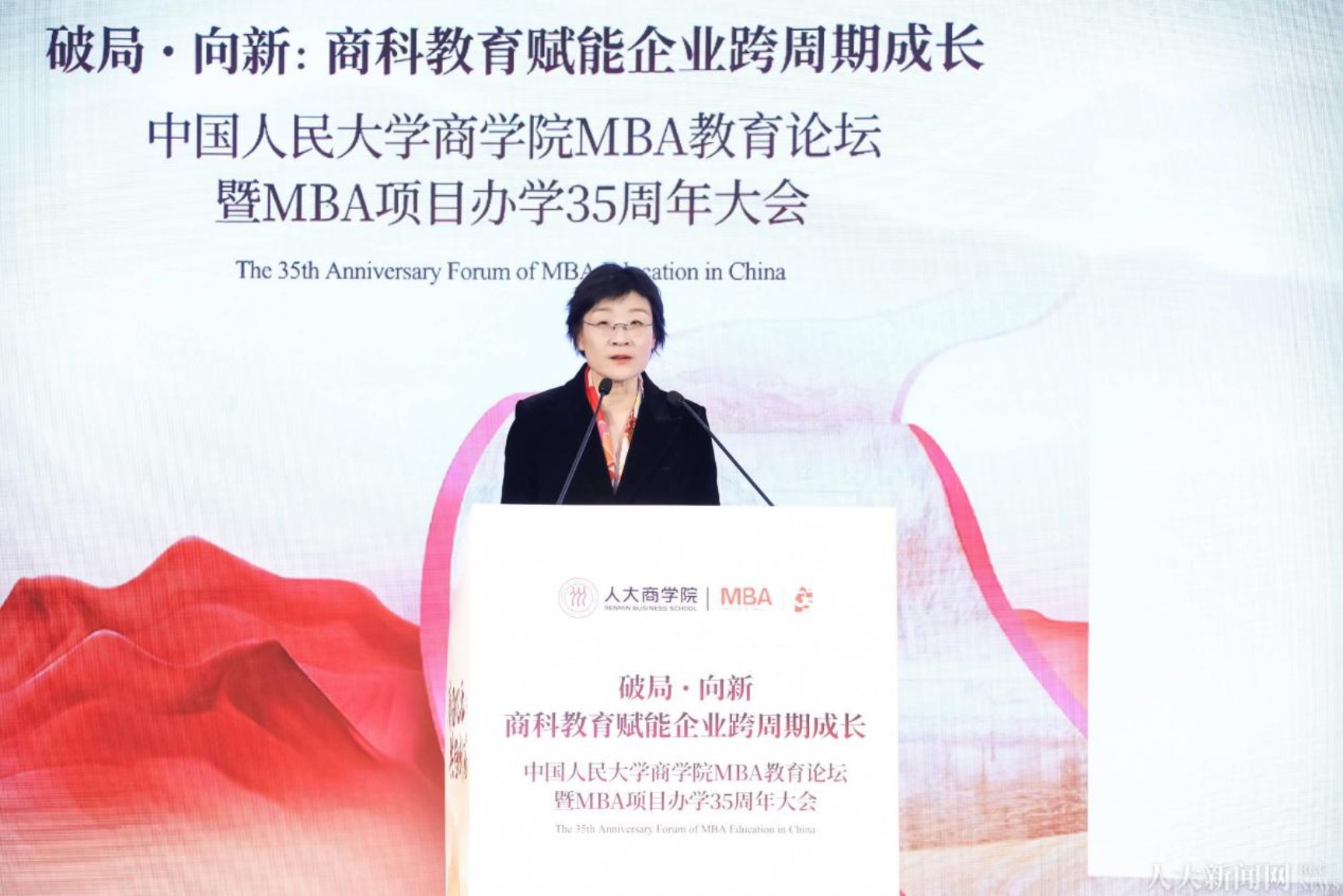
Xuan Tianying noted that the conference not only reviewed past achievements but also looked toward the future. She emphasized key questions for the new era: how to reform while maintaining core values, how to innovate amid challenges, and how business education can support long-term, stable enterprise development. She added that the school will continue contributing to the advancement of management education in China.
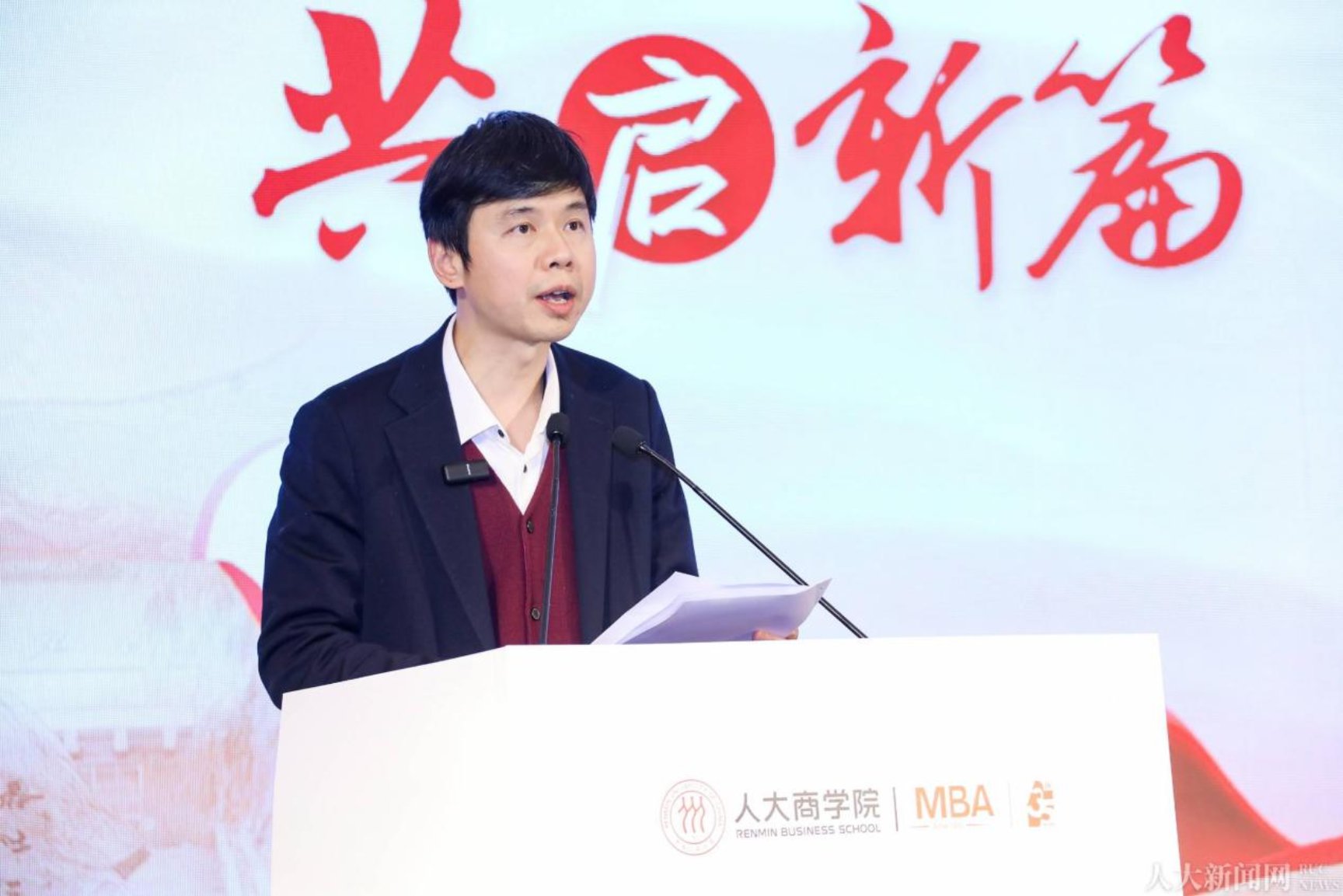
Yi Jingtao noted that over the past 35 years, the MBA program of RMBS has been a pioneer in business administration education in China. It has remained committed to its mission of serving the society and the nation. It also aims to cultivate leading talents in Chinese management. The school is dedicated to becoming a world class business school as the expert in Chinese management.
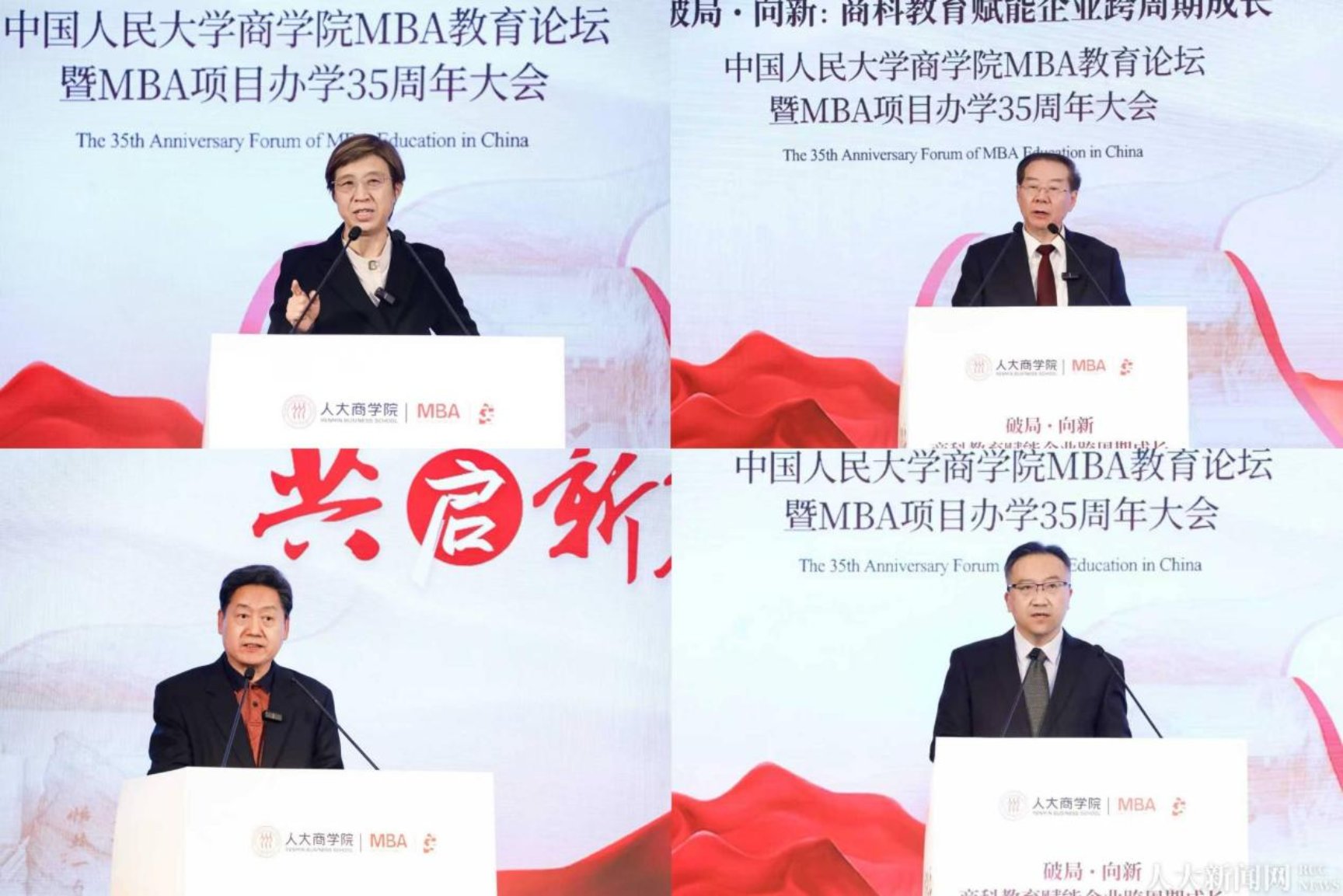
During the keynote speeches session, Yi Zhihong delivered a speech titled “Rethinking MBA Education in a New Context.” She examined the opportunities and challenges confronting MBA education in China, and emphasized that the MBA program should stay true to its mission, adopt an entrepreneurial mindset, and continue to play a leading role.
Yang Du presented “Echoes of the Times and Passing the Torch.” He reviewed the development of the RMBS MBA program, from drawing on diverse sources to forming its own distinct school of thought. He introduced the “Four-Integration” teaching approach and the “One Divided into Three” management framework, highlighting value creation and contribution to society, and encouraging faculty and students to strive for excellence.
Zhu Futang delivered “Breaking Barriers and Moving Forward: Supporting Firms’ Long-Term Growth with Eastern Wisdom.” He noted that Eastern wisdom is essential for helping firms navigate economic cycles. In the AI era, he stressed the need to integrate theory with practice and encouraged firms to focus on strategy, execution, and ecosystem development, supported by cultural confidence and technological innovation.
Li Yujie presented “Business Foundations and Digital Intelligence: Growth Paths for Technology Firms Across Cycles.” He shared his company’s transformation from an internet communications business to an AI-driven digital services provider, and emphasized that MBA education equips leaders with key capabilities in change management, innovation, and strategic analysis, which are critical for business transformation.
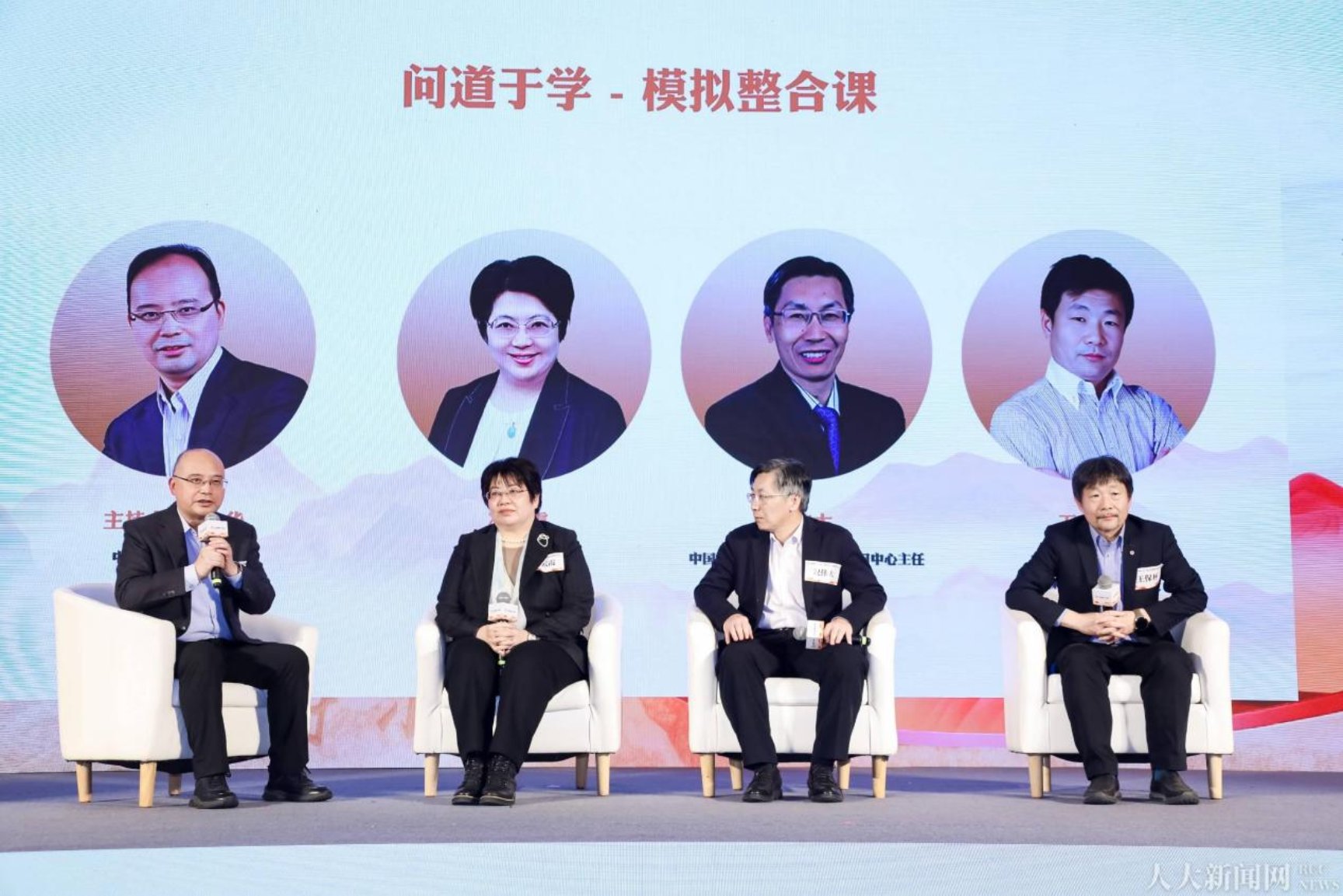
In the roundtable session “Dialogue with Academia: Simulated Integrated Course,” professors Feng Yunxia, Kuang Weida, and Wang Baolin from RMBS discussed organizational transformation in the digital era. The session was moderated by Song Hua.
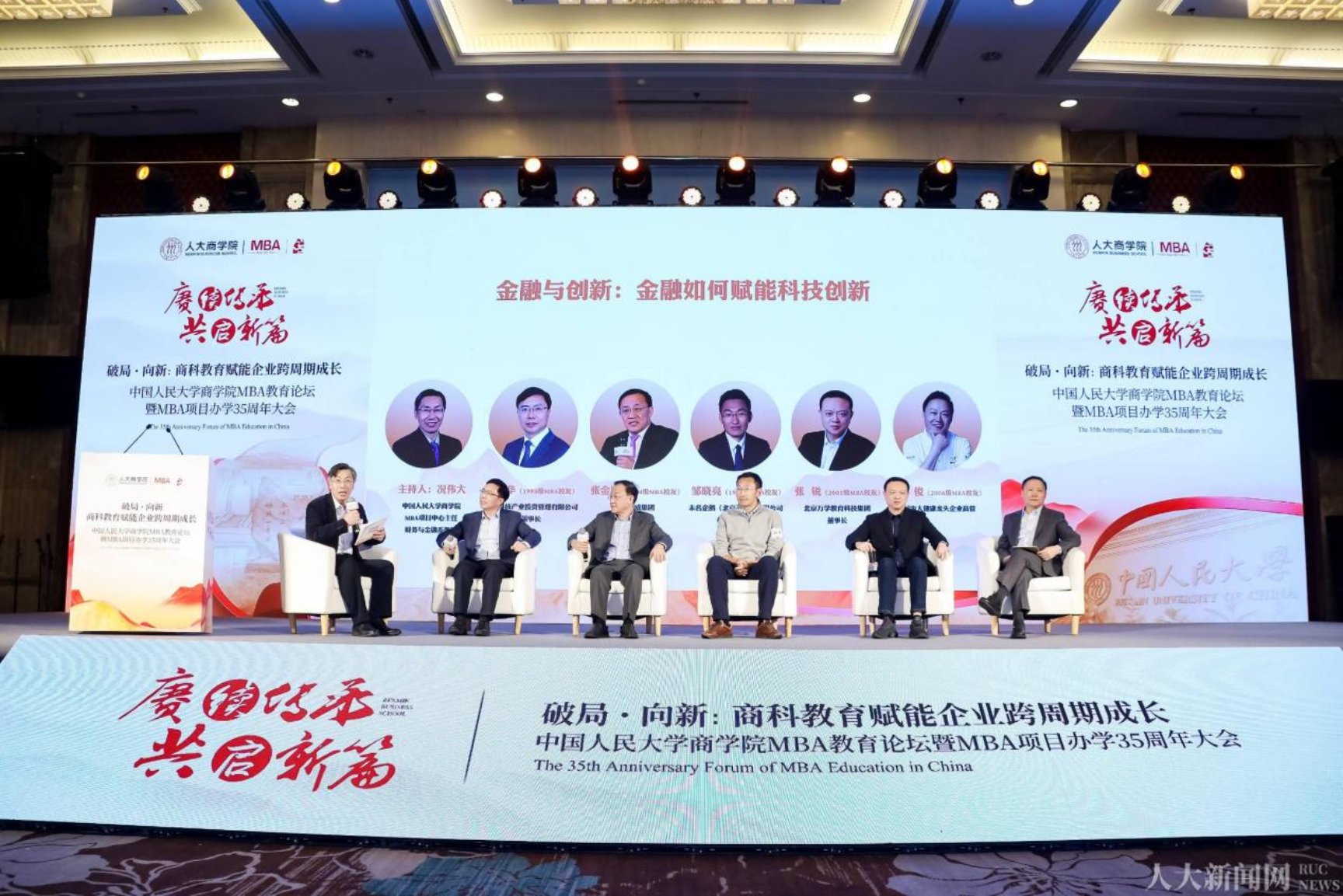
In the roundtable session “Dialogue with Business: Reflections on Growth”, MBA alumni of RMBS — Sun Hua (Class of 1993), Zhang Jinshun (Class of 1994), Zou Xiaoliang (Class of 1999), Zhang Rui (Class of 2001), and Lu Jun (Class of 2006) discussed how finance can empower scientific and technological innovation. The session was moderated by Kuang Weida.
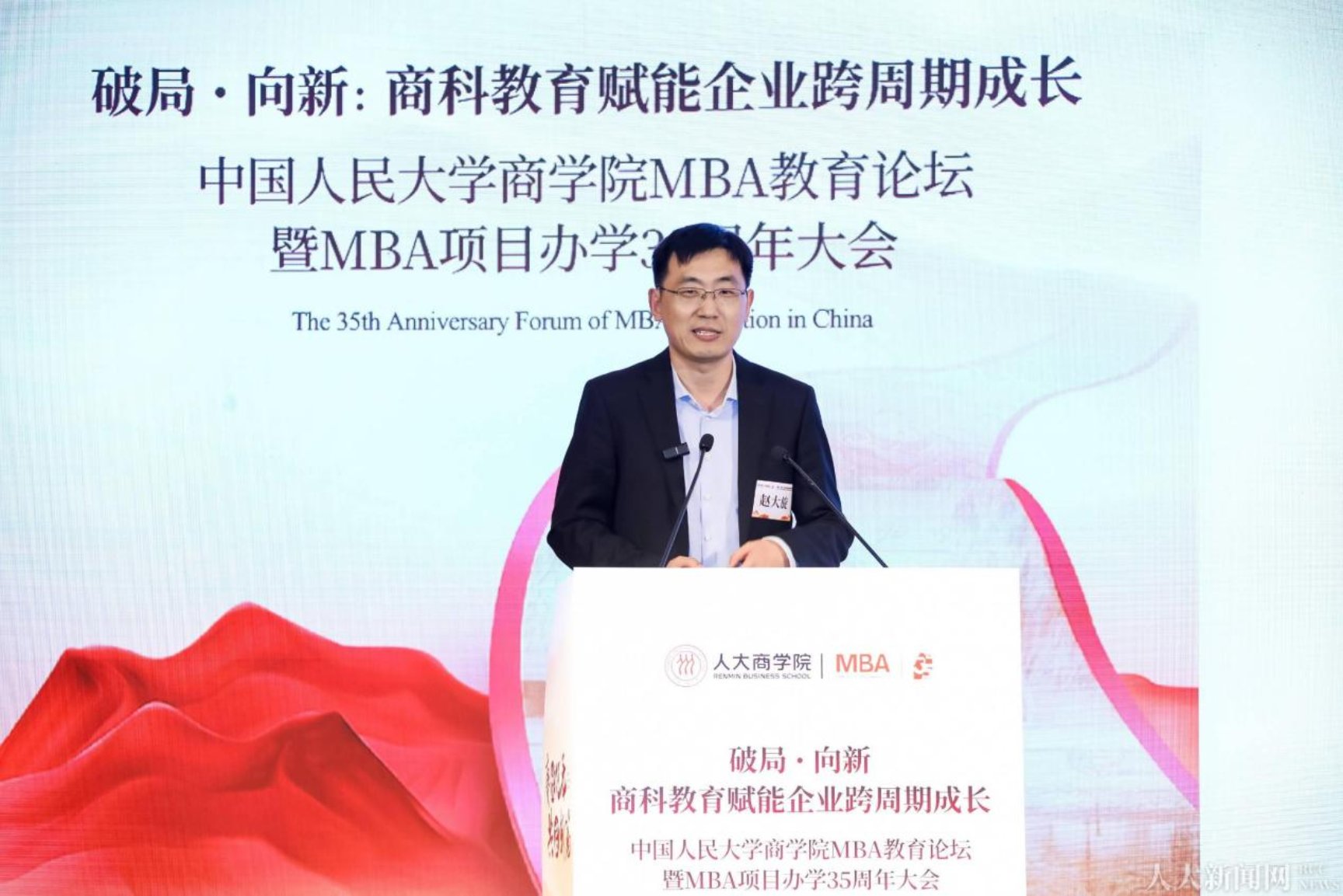
Zhao Daxuan delivered a report titled “35 Years of RMBS MBA: Mission and Achievement” reviewing the program’s full development and major milestones. He noted that the program has consistently kept pace with the times, driving continuous innovation in its educational model and curriculum to ensure the forward-looking and competitive talent development. He added that the MBA program will uphold its core values of integrity and action, and contribute further to shaping the future of business civilization.
Over the past 35 years, the MBA program of RMBS has remained committed to serving national strategies and responding to the needs of the times. Guided by its mission to contribute Chinese management wisdom and cultivate global leadership talents to the world, it has continuously led innovation in business administration education in China. The program will continue to build on Chinese management practices and work closely with alumni, enterprises, and society to move forward together and create a shared future.